
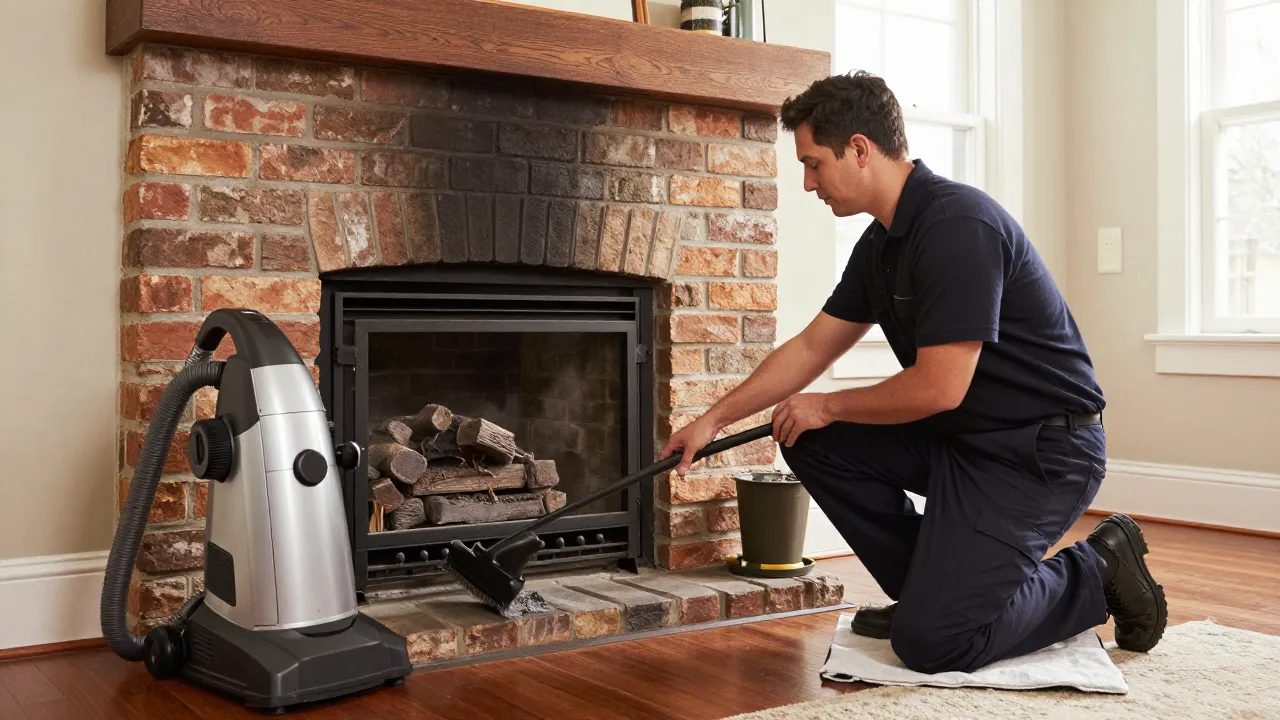
Signs Your Chimney Needs Cleaning
Campfire smell in July, smoke rolling back, black flakes in the firebox — the seven signs your flue is asking for a sweep before burn season.
Read the Article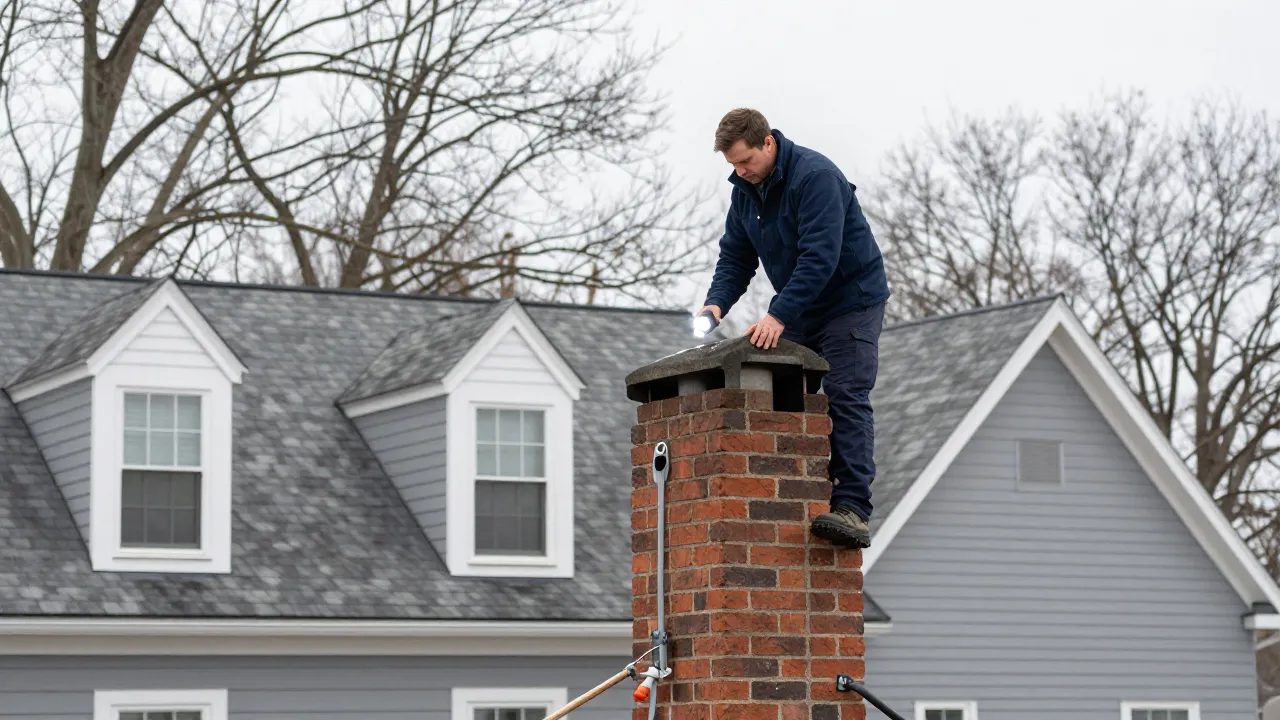
Most chimney fires are not accidents of fate. They are the end of a chain — wet wood, heavy creosote, a skipped inspection — that can be broken at any link. Here is the checklist we give our own families before the Maryland burn season.
An annual inspection and a sweep when deposits reach 1/8 inch is the whole foundation. Creosote is fuel stored inside your exhaust system; the sweep removes the fuel before it ever meets a spark.
Wood should be split, stacked and dried for six to twelve months — under 20% moisture. Wet and green wood burns cooler and dirtier, laying down creosote several times faster and smoking out the neighborhood in the bargain.
Hot fires burn cleaner. Smoldering, damped-down fires are creosote factories. Burn briskly, avoid overnight smoldering, and let the flue fully warm before settling the fire in.
A chimney fire often announces itself: a loud roaring like a freight train or jet, dense smoke, an intense smell, and sometimes flames or sparks from the top of the stack. If it happens: get everyone out, call 911, and do not use the fireplace again until a Level 2 inspection has cleared it — fires crack liners invisibly.
Three feet around the fireplace: no wood piles against the box, no rugs, no holiday stockings within ember range while burning. Use a screen or glass doors, and never leave a fire unattended overnight.
Ash holds live coals for days. Metal container, tight lid, stored outside away from the house and deck — never a paper bag in the garage.
Working smoke and carbon monoxide detectors on every level, tested monthly. A damaged flue can leak CO silently; the detector is what makes it loud.
Winter in Maryland is burning season. A clean flue, dry wood and a sound liner turn it into the safest heat in the house — and all three start with one inspection.
Talk to a specialist — photo-documented inspections and upfront written estimates across 115 Maryland and DC communities.
Campfire smell in July, smoke rolling back, black flakes in the firebox — the seven signs your flue is asking for a sweep before burn season.
Read the Article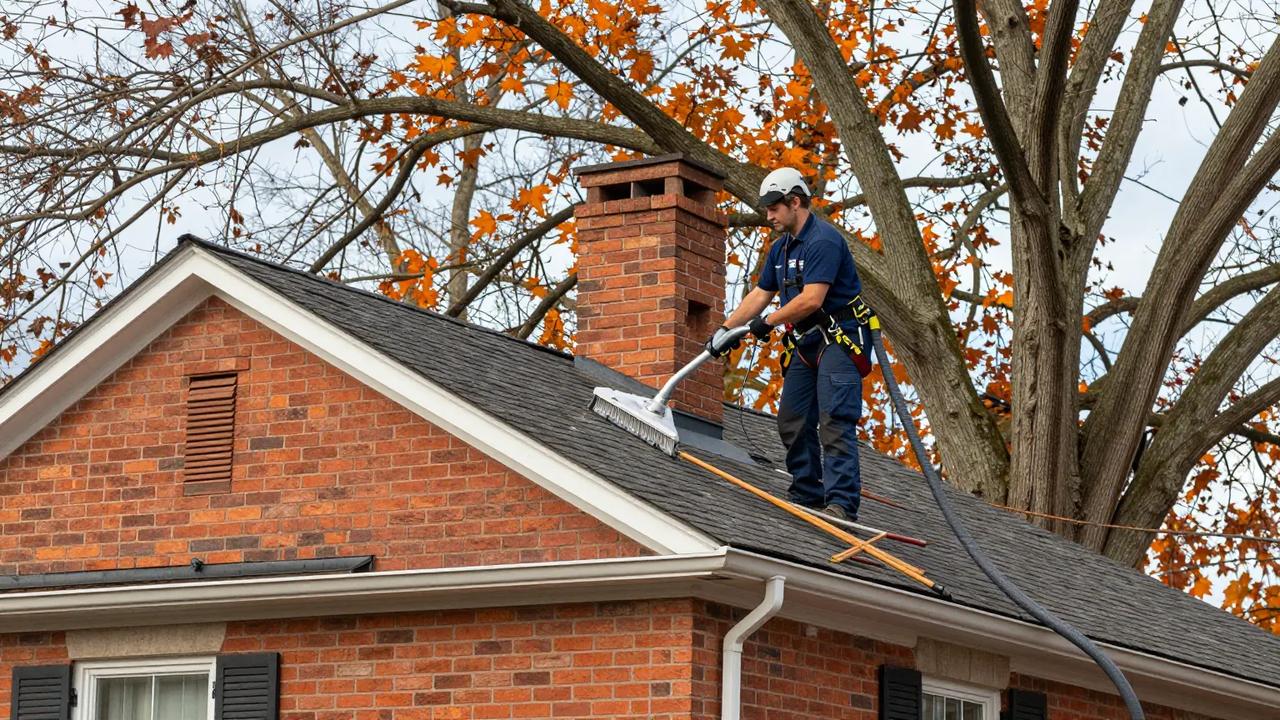
What actually drives the price of a chimney sweep in Maryland — flue count, creosote stage, access — and how to read any quote you are given.
Read the Article
A cap costs a fraction of the repairs it prevents. The Maryland math on rain, raccoons and rusted dampers — and when a cap is not the answer.
Read the Article